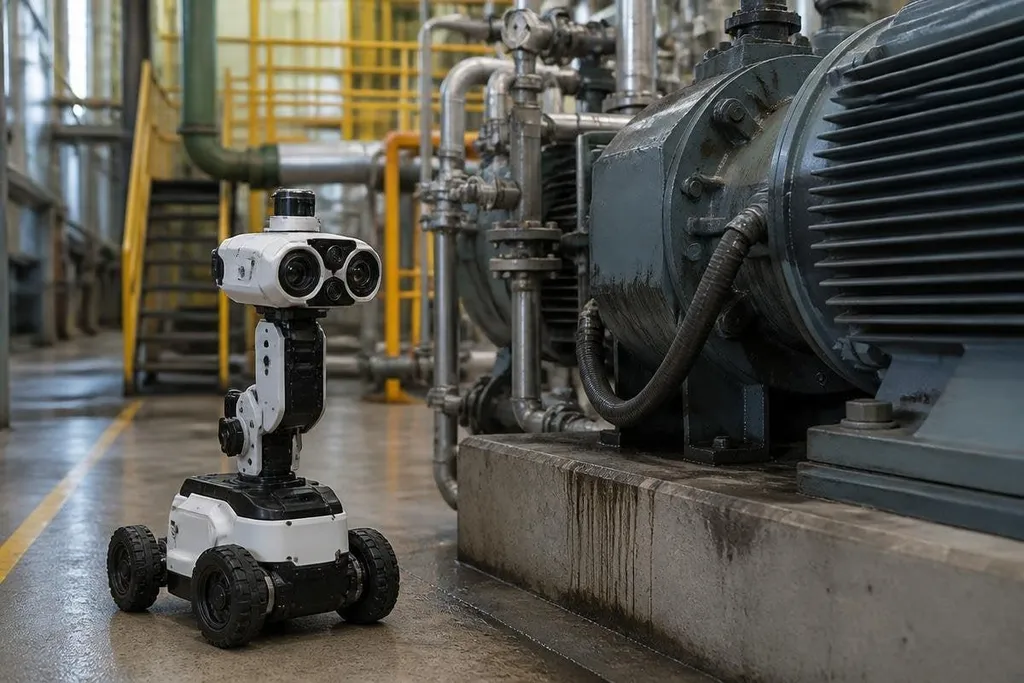
A maintenance robot can now inspect equipment, compare new sensor data with past readings, and flag a fault before a technician arrives. The hard part is still deciding whether that warning points to a real failure or a harmless change in the machine.
- More useful inspections: cameras, microphones, thermal sensors, and vibration sensors can work together.
- Earlier warnings: software can spot changes in a motor, pump, belt, or bearing.
- Human sign-off stays: a technician still decides what gets repaired and when.
How AI helps a maintenance robot
A maintenance robot first gathers data. A camera may check for a loose guard or leaking fluid. A thermal sensor can show a hot bearing.
A microphone can record a change in motor noise, while a vibration sensor measures movement that people cannot feel by hand. AI software looks for patterns in that data and may compare a new inspection with earlier runs, a known healthy machine, or a set limit chosen by the maintenance team.
The output is usually a warning, a location, and a confidence score rather than a repair decision. That matters because maintenance work depends on timing.
A robot that finds a change during a scheduled inspection can give a technician more time to check the part, order a replacement, and plan a safe shutdown. The value comes from better timing, not from the robot making a dramatic claim about the fault.
What changes for maintenance teams
The robot can repeat the same route and collect the same type of data each time. That makes changes easier to compare, especially in places where equipment sits across a large plant or runs during hours when fewer people are present.
The software can also sort inspection results. A small change in temperature may need another scan, while a sharp rise in vibration may send the issue to a technician sooner. A clear record helps the team see what changed, when it changed, and which part needs attention.
That record only works if the robot knows where the data came from. The system needs a map, a stable sensor position, and a link between each reading and the correct asset. A wrong machine label can send a good technician to the wrong pump.
Asset labels become the first limit when an AI system moves from one inspection to the next. Maintenance robotics reporting from Robot24.com can show whether the robot keeps each reading tied to the right asset, and where a technician still needs to check the result.
Where the limits remain
AI needs useful examples. If a team has little past data from a machine, the software may have less help when it meets a rare fault. A clean factory image can also differ from a dusty, wet, or poorly lit inspection route.
Sensor quality matters just as much. A loose vibration sensor, a dirty camera lens, or a blocked thermal view can change the result. The software may label that change as a machine fault unless the system checks the sensor itself.
The robot also needs a safe operating plan. It must move around people, stop when a path is blocked, and keep a safe distance from equipment. Inspection is one task. Repair, isolation, and restart need separate controls and trained staff.
I'd trust an AI warning as a reason to inspect a part, not as permission to replace it without a technician's check.
How to judge a maintenance robot
Before a trial or purchase, check these points against the job you need done:
- Name the asset: confirm which pumps, motors, pipes, or panels the robot can inspect.
- Check the sensors: ask what each sensor measures and how dirt, heat, water, or low light affect it.
- Review the data path: find out where readings are stored, how labels are added, and who can see them.
- Set the human step: write down who checks a warning, who approves a shutdown, and who records the repair.
- Test the false alarms: measure how often the system sends a warning that needs no repair.
The best first trial uses one route and one type of equipment. That gives the team a clear baseline, shows where the sensors fail, and makes the results easier to check against technician reports.
Maintenance robots will become more useful as their data gets cleaner and their inspection routes become repeatable. The next proof to ask for is simple: after a defined trial, did the robot find faults that people would have missed, with enough accurate warnings to justify the time and cost?