Understanding On-Site Videography
Defining On-Site Videography and Its Significance
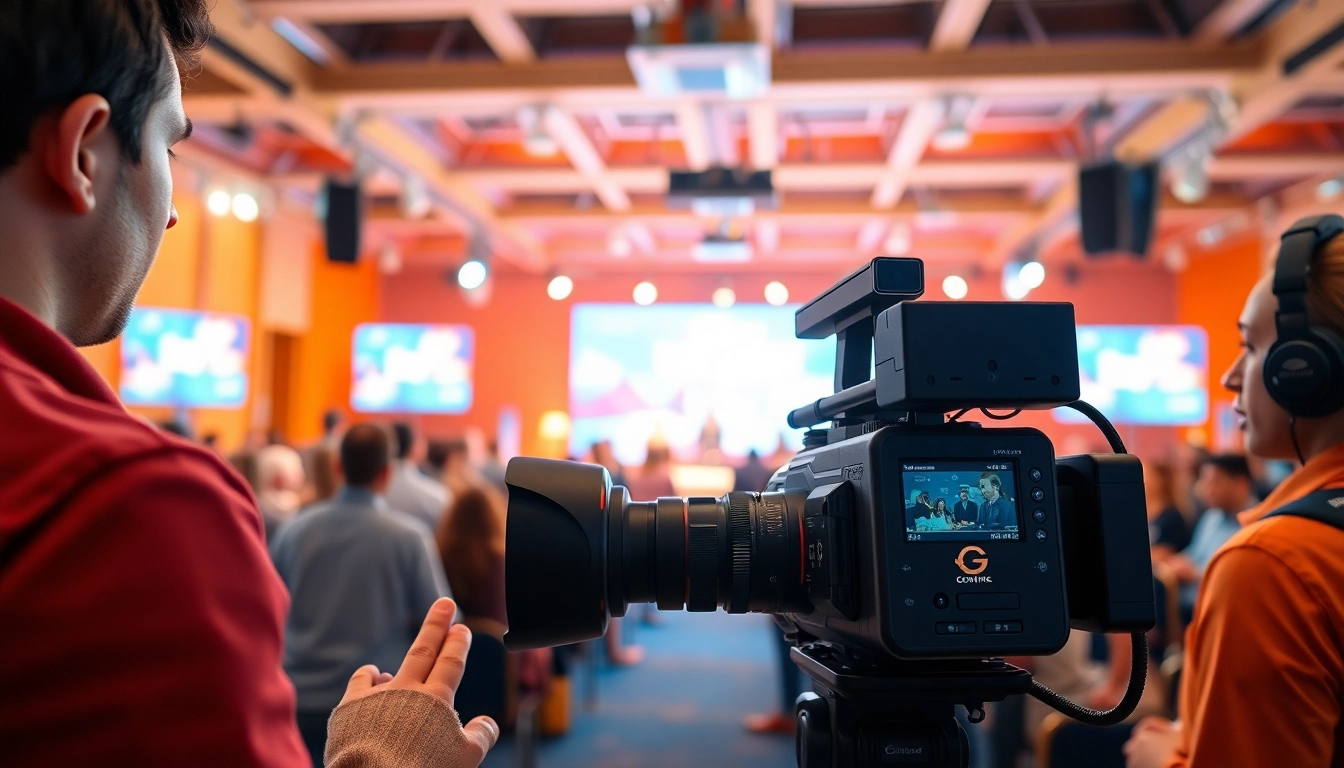
In an age where visual storytelling is paramount, on-site videography emerges as a vital technique for capturing authentic, raw moments in various settings. This method involves filming in the locations where events occur—be it corporate gatherings, weddings, or promotional content creation. The significance of on-site videography lies not just in its accessibility but also in its ability to reflect the true essence of events, making them relatable and engaging for audiences. Whether it’s to document a momentous occasion or to create promotional content, on-site videography ensures that every frame tells a compelling story.
Evolution of Video Production Techniques
The history of video production has witnessed a seismic shift from bulky cameras and reel-to-reel systems to compact, high-tech digital setups. Previously, on-site filming was restricted to large teams equipped with heavy equipment, making it expensive and logistically challenging. However, technological advancements have democratized video production, allowing individuals and small teams to achieve professional-grade results with portable cameras, drones, and innovative editing software. As a result, on-site videography now not only caters to high-profile events but also serves small businesses and individuals seeking to document their stories creatively and affordably.
Key Benefits of On-Site Videography
On-site videography offers a range of distinct advantages:
- Authenticity: Capturing real-life experiences allows for raw emotions and genuine interactions, making the content relatable.
- Engagement: Viewers are often more engaged with content that feels immediate and personal, leading to better retention and responses.
- Location-specific context: Shooting in the relevant environment adds depth and context to narratives that would be lost in a studio setup.
- Cost-effective: With advancements in technology, producing high-quality videos on-site has become more affordable than traditional studio setups.
Essential Equipment for On-Site Videography
Camera Types and Their Impact
The type of camera used in on-site videography can significantly impact the overall quality of the footage. Options range from DSLRs to mirrorless cameras, each offering unique benefits:
- DSLRs: Known for their versatility and image quality, DSLRs are excellent for both video and stills.
- Mirrorless Cameras: Compact and lightweight, these cameras provide high-quality results with advanced features like 4K video capabilities.
- Action Cameras: Ideal for dynamic filming, these compact cameras can capture immersive 360-degree footage.
- Smartphones: With advanced camera technology, smartphones can also serve as effective devices for on-site videography when used creatively.
Audio Equipment Considerations
The importance of quality audio in videography cannot be overstated. Capturing clear sound is essential for storytelling, particularly in on-site contexts where ambient noise can be prominent. Essential audio equipment includes:
- Lavalier Microphones: These small clip-on mics are perfect for interviews and speeches, ensuring clear audio without obstructing the speaker's movement.
- Shotgun Microphones: Great for capturing audio from a distance, shotgun mics directly record sound from the source while minimizing background noise.
- Portable Recorders: These devices can record high-quality audio independent of the camera, allowing for greater flexibility.
Lighting Tools for Optimal Footage
A well-lit scene enhances the visual quality of any video. In an on-site videography environment, natural lighting can be unpredictable; therefore, having a robust lighting kit is crucial. Key lighting tools include:
- Softbox Lights: These provide soft, diffused light that reduces shadows and helps evenly illuminate subjects.
- LED Panels: Portable and adjustable, LED panels can adapt to various filming conditions and are perfect for quick setups on location.
- Reflectors: By bouncing natural light onto subjects, reflectors can help fill shadows and enhance the overall lighting.
Techniques to Enhance On-Site Videography Quality
Framing Shots for Impact
Effective framing can transform ordinary footage into visually compelling narratives. Understanding the principles of composition—such as the rule of thirds, leading lines, and framing techniques—will guide videographers in utilizing their surroundings creatively. For instance, placing key subjects off-center may create a more interesting shot, while leading lines can draw viewer attention effectively to focal points.
Effective Use of Movement and Angles
On-site videography should embrace dynamic shots to maintain viewer interest. Utilizing various angles, such as high, low, or tilted positions, alongside camera movements—like pans, tilts, and tracking—can inject energy and excitement into the footage. Drones for aerial shots also offer spectacular perspectives that elevate the quality and uniqueness of videography projects.
Strategies for Capturing Authentic Moments
Authenticity is vital in on-site videography, as viewers connect with genuine interactions and spontaneous moments. Strategies to capture real emotion include:
- Preparation: Familiarize yourself with the event schedule and anticipatory cues to catch poignant moments.
- Be Observant: Rather than directing attention, observe and film people naturally interacting with their environment.
- Embrace Imperfection: Unscripted moments often yield the most relatable content, so avoid over-directing participants.
Post-Production for On-Site Videography
Editing Techniques that Elevate Your Content
The editing phase is where the raw footages evolve into a polished narrative. Key editing techniques that can significantly enhance on-site videography include:
- Cutting for Pace: Use tempo to maintain engagement, alternating between different shot lengths and transitions.
- Color Grading: Adjusting color schemes can evoke specific emotions and enhance the overall aesthetic of the footage.
- Sound Design: Incorporating sound effects and ambience can add richness to the video experience, making it more immersive.
Incorporating Visual Effects and Graphics
To further engage audiences, incorporating visual effects and graphics during post-production can be highly effective. Basic effects such as transitions, lower-thirds for titles, or overlays offer an informative aspect without overshadowing the core content. More advanced techniques, such as motion graphics, can considerably enhance storytelling, particularly in promotional videos or instructional content.
Optimizing Videos for Distribution
The final step in the production process involves optimizing videos for various platforms. Each platform may require different specifications, such as aspect ratios, length limits, and keyword optimization to enhance discoverability. Ensure to export videos in formats suited for Facebook, Instagram, YouTube, and other platforms, while strategically integrating relevant keywords in titles, descriptions, and tags to boost SEO and visibility.
Measuring Success in On-Site Videography
Analyzing Viewer Engagement and Feedback
Post-release, measuring the success of on-site videography is essential for continuous improvement. Tools such as analytics dashboards help track viewer engagement metrics, including watch time, likes, shares, and comments, allowing videographers to glean insights about what resonates with their audience. A feedback loop, whether through surveys or direct comments, also provides qualitative data to refine future projects.
Setting Goals for Future Productions
Establishing clear objectives is fundamental for directing future videography projects. Goals could scope range from enhancing viewer engagement rates, expanding a specific audience demographic, or increasing overall content production frequency. By aligning production strategies with these objectives, videographers can remain focused and purposeful in their creative pursuits.
Adapting Strategies Based on Performance Metrics
Continuous improvement is the cornerstone of successful videography. By analyzing metrics, videographers can adapt their approaches to align with audience preferences. For instance, identifying the most effective styles or topics can inform future content creation practices, ensuring that they remain relevant and appealing to viewers.